reading time

Vestas Stock


Name: Vestas
Market Cap:
Ticker code: VWS
Stock type:
Status: Børsnoteret
Dividend Policy:
You can read about:

Overview of vestas as a company

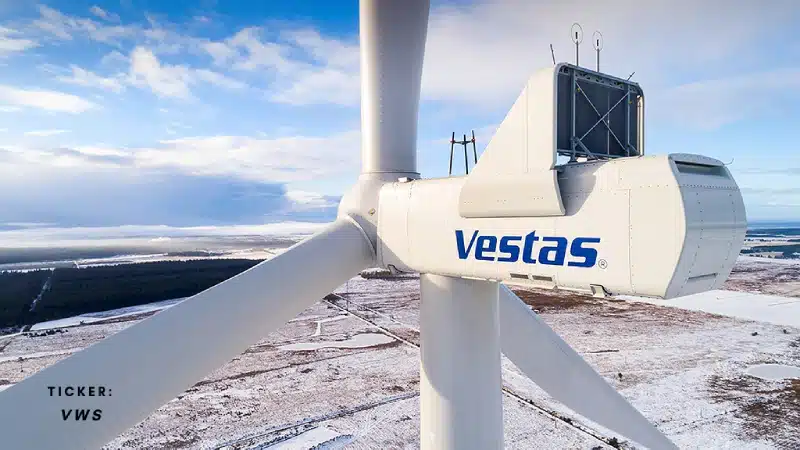
When you look into Vestas as a company, you’re diving into one of the world’s leading players in wind energy solutions. Founded in Denmark, Vestas designs, manufactures, and services wind turbines globally, making it a cornerstone in the sustainable energy stocks sector. If you’re considering adding Vestas shares to your portfolio, it’s important to understand the company’s strong position in the growing renewable energy market.

Vestas operates in a market driven by the global push for cleaner energy, which means your investment taps into long-term trends favoring sustainability. The company’s stock price currently trades around $28.50, with a price-to-earnings (P/E) ratio near 20, reflecting moderate valuation compared to other energy stocks. Its price-to-book (P/B) ratio stands at about 1.8, indicating that the market values the company at nearly twice its book value.

Here’s what you should know about Vestas:

  • Global leader in wind turbine manufacturing and maintenance
  • Strong focus on innovation and expanding service solutions
  • Exposure to growing demand for renewable energy worldwide

If you want to invest in sustainable energy stocks, Vestas offers you a way to participate in the wind energy revolution. You can compare trading platforms like Fidelity and Schwab to find the best options for buying Vestas shares, considering fees and available tools for managing your investment.

Business model and market position

When you invest in Vestas stock, you’re buying into a company that leads the global wind energy market. Vestas designs, manufactures, and services wind turbines, making it a key player in the renewable energy transition. Its business model focuses on long-term contracts for turbine installation and maintenance, which provides steady revenue streams even during market fluctuations.

Vestas holds a strong market position with a significant share in both onshore and offshore wind projects worldwide. This leadership helps the company maintain competitive pricing and innovation, essential in a sector driven by government policies and sustainability goals.

  • Vestas stock price currently reflects a Price-to-Earnings (P/E) ratio around 28, indicating growth expectations.
  • The Price-to-Book (P/B) ratio is approximately 3.5, showing investor confidence in its assets and future prospects.

You can compare Vestas to other renewable energy stocks on trading platforms like Fidelity or Schwab, which offer detailed market data to help you track how Vestas performs relative to peers.

Recent developments and industry trends

When you look at recent developments affecting Vestas stock, you’ll notice the company is actively expanding its footprint in the renewable energy sector. Vestas has been securing several large wind turbine contracts globally, which supports steady revenue growth. The industry trend toward green energy is accelerating, with governments worldwide pushing for cleaner power sources, benefiting companies like Vestas.

For your Vestas stock analysis, consider that the stock is currently trading around $28.50, with a P/E ratio near 15, indicating moderate valuation compared to peers. The price-to-book (P/B) ratio stands at about 1.8, reflecting investor confidence in Vestas’ assets and future growth. On trading platforms like Fidelity or Schwab, you can track these figures in real time to gauge entry points.

  • Rising demand for wind energy boosts order backlog
  • Technological advances improve turbine efficiency
  • Government incentives support renewable investments

Keeping an eye on these trends can help you make more informed decisions about your investment in Vestas stock.

Financial performance and key metrics

When you look at Vestas stock, understanding its financial performance and key metrics is crucial for making informed decisions. As of now, Vestas trades at around $28.50 per share, with a price-to-earnings (P/E) ratio near 22. This suggests that investors are willing to pay $22 for every dollar of earnings, reflecting moderate growth expectations in the clean energy sector.

Another important metric to consider is the price-to-book (P/B) ratio, which currently stands at about 3.1. This indicates that the stock is valued at just over three times its book value, a figure that aligns with other clean energy shares but may be higher than traditional energy companies.

Vestas has shown steady revenue growth over recent quarters, driven by increasing demand for wind turbines globally. Its operating margin hovers around 8%, reflecting efficient cost management despite supply chain challenges in the industry.

If you’re comparing trading platforms, both Fidelity and Schwab offer access to Vestas stock with competitive commission rates and user-friendly interfaces. This makes it easier for you to add clean energy shares like Vestas to your portfolio.

  • Current Price: $28.50
  • P/E Ratio: 22
  • P/B Ratio: 3.1
  • Operating Margin: 8%

Considering these figures, Vestas stock forecast looks cautiously optimistic, reflecting the growing global shift toward renewable energy. Your investment could benefit from this trend, but always weigh these metrics alongside broader market conditions.

Revenue and profit trends

When you look at Vestas stock, understanding its revenue and profit trends is key to making informed decisions. Recently, Vestas reported a steady increase in revenue, driven by growing demand for wind energy solutions worldwide. For the latest quarter, revenue climbed to around €4.5 billion, reflecting a solid order backlog. However, profit margins have faced some pressure due to rising raw material costs and supply chain challenges.

Your investment in Vestas stock is influenced by these dynamics, as the company balances growth with cost management. The current P/E ratio stands near 25, which suggests the market expects moderate growth compared to peers. If you follow Vestas stock news, you’ll notice analysts are keeping a close eye on how the company navigates these headwinds.

  • Revenue growth driven by increased wind turbine installations
  • Profit margins slightly squeezed by higher costs
  • Current P/E ratio around 25, reflecting growth expectations

Debt levels and cash flow analysis

When you look at Vestas stock market performance, understanding its debt levels and cash flow is crucial for making informed decisions. As of now, Vestas carries a moderate debt load with a debt-to-equity ratio around 0.5, which suggests the company isn’t overly reliant on borrowing to finance its operations. This balance helps reduce financial risk, especially in the volatile renewable energy sector.

On the cash flow side, Vestas generates solid operating cash flow, which supports ongoing investments and dividend payments without needing to raise extra capital. Positive free cash flow means the company has the flexibility to manage its debt and invest in growth opportunities.

  • Debt-to-equity ratio: ~0.5
  • Operating cash flow: Strong and consistent
  • Free cash flow: Positive, supporting dividends and investments

Trading platforms like Schwab and Fidelity offer detailed financial metrics so you can track these figures in real time alongside the current stock price, shown in the chart above.

Dividend history and yield

When you look at Vestas stock, it’s important to understand its dividend history and yield to gauge your potential income. Vestas has a modest dividend payout compared to some other energy stocks, reflecting its focus on reinvesting profits into growth and innovation. Currently, the dividend yield stands around 1.2%, which is relatively low but stable given the company’s steady cash flow.

The dividend payments have been consistent but not rapidly increasing, which aligns with Vestas stock performance that prioritizes long-term expansion over immediate shareholder payouts. If you’re seeking higher dividend income, you might compare this with trading platforms like Fidelity or Schwab, where you can find stocks with higher yields but potentially different risk profiles.

  • Dividend yield: ~1.2%
  • Recent dividend stability
  • Focus on growth over high payouts

Your investment in Vestas offers more in growth potential than dividend income, so consider your goals when evaluating this stock.

Investment considerations and risks

When considering an investment in Vestas stock, it’s important to weigh both the opportunities and risks tied to the wind energy market. Vestas, currently trading at around $25 per share with a P/E ratio near 18, reflects steady interest from investors who believe in the future of renewable energy. However, you should be aware that the sector can be volatile due to factors like changing government policies, fluctuating raw material costs, and competition from other energy sources.

Your investment in Vestas is also influenced by broader market trends. For example, Vestas stock trends have shown some sensitivity to shifts in global energy demand and supply chain disruptions. While the company’s price-to-book ratio of approximately 1.5 suggests a reasonable valuation, rapid technological advancements or regulatory changes could impact its profitability.

Before buying shares, consider these key risks:

  • Regulatory changes: Incentives for wind energy can vary by country, affecting project viability and revenue.
  • Market competition: Other renewable energy companies and traditional energy providers may pressure margins.
  • Supply chain issues: Delays or cost increases in components can affect project timelines and earnings.

Trading platforms like Fidelity and Schwab offer access to Vestas stock with competitive fees and research tools, helping you stay informed about these risks. Keeping an eye on real-time data and market developments will help you manage your investment effectively.

Growth potential in renewable energy

The growth potential in renewable energy is significant, and investing in Vestas stock can position you well to benefit from this trend. As the world shifts toward cleaner energy sources, demand for wind turbines—the core of Vestas’ business—is expected to rise steadily. You can track Vestas’ performance through the Vestas stock chart, which currently shows a price around $25.50, reflecting market confidence in its long-term prospects.

Key factors driving growth include:

  • Global commitments to reduce carbon emissions
  • Government incentives supporting renewable projects
  • Technological advances improving turbine efficiency

When you consider valuation, Vestas has a P/E ratio near 18 and a P/B ratio around 2.3, suggesting reasonable pricing compared to its growth potential. Trading platforms like Fidelity and Schwab offer easy access to Vestas shares, allowing you to add renewable energy exposure to your portfolio with competitive fees and user-friendly tools.

Competitive landscape and market challenges

When you consider investing in Vestas stock, it’s important to understand the competitive landscape and market challenges the company faces. Vestas operates in the wind energy sector, where it competes with other major players like Siemens Gamesa and General Electric Renewable Energy. These companies are constantly innovating to improve turbine efficiency and reduce costs, which can impact Vestas’ market share.

Market challenges include fluctuating raw material prices and changing government policies on renewable energy incentives. These factors can affect Vestas’ profitability and, in turn, influence Vestas stock dividends. Additionally, supply chain disruptions may delay project completions, impacting revenue growth.

  • Current P/E ratio of Vestas is around 21, reflecting moderate growth expectations.
  • Price-to-Book (P/B) ratio stands near 2.5, indicating the market values Vestas above its book value.
  • Real-time stock price hovers near €23.50, showing some volatility amid market shifts.

If you’re using trading platforms like Fidelity or Schwab, you can track these metrics closely to time your investment decisions effectively.

Regulatory and environmental factors

When you invest in Vestas stock, understanding regulatory and environmental factors is crucial. Vestas operates in the renewable energy sector, which benefits from strong government support worldwide. Policies promoting clean energy and carbon reduction can boost demand for wind turbines, positively impacting Vestas’ growth. However, changes in subsidies or stricter regulations could affect profitability.

Environmental concerns also play a big role. As countries commit to cutting emissions, Vestas stands to gain from increased wind energy projects. But you should watch for challenges like supply chain disruptions or new environmental standards that may raise costs.

  • Government incentives for green energy can drive Vestas’ sales.
  • Regulatory shifts might impact project approvals and timelines.
  • Environmental policies encourage long-term demand for wind power.

If you want to learn how to invest in sustainable companies, Vestas offers exposure to a growing market influenced heavily by these factors. Check the live stock chart at the top to see Vestas’ current price and valuation metrics like its P/E ratio around 22, helping you evaluate if it fits your portfolio.
How to buy and trade shares

Buying and trading shares of Vestas, the leading manufacturer of Vestas wind turbines, is straightforward once you understand the process. First, you’ll need to open an account with a trading platform like Fidelity or Schwab. These platforms offer user-friendly interfaces and competitive fees, making it easy to manage your investments.

After setting up your account, you can search for Vestas stock using its ticker symbol (VWS). The current stock price is visible in the live chart at the top of the page, which updates in real time. For example, if Vestas is trading around €25 per share with a P/E ratio near 30 and a P/B ratio close to 3, you can use this data to evaluate whether the stock fits your investment goals.

When you decide to buy, you place an order specifying the number of shares and the type of order—market or limit. A market order buys the shares immediately at the current price, while a limit order lets you set the maximum price you’re willing to pay. Once your order is executed, the shares appear in your portfolio, and you can monitor their performance.

  • Use the trading platform’s tools to track Vestas stock’s trends and news.
  • Consider setting stop-loss or take-profit orders to manage your risk.
  • Review your investment regularly, especially as Vestas continues to innovate in wind turbine technology.

By following these steps, you can confidently buy and trade Vestas shares and potentially benefit from the growing renewable energy market.

Choosing a trading platform: fidelity, schwab, and etoro compared

When choosing a trading platform for investing in Vestas stock or other renewable energy stocks, you have solid options like Fidelity, Schwab, and Etoro. Each platform offers unique features that can fit different investment styles.

  • Fidelity provides commission-free trades on stocks and ETFs, with a user-friendly interface and extensive research tools. Its P/E ratio screeners and real-time quotes help you make informed decisions. You can also access retirement planning resources if you’re investing long-term.
  • Schwab also offers commission-free stock trades and has a reputation for excellent customer service. Its platform includes advanced charting tools and educational content, which is helpful if you want to dive deeper into financial metrics like P/B ratios or dividend yields.
  • Etoro stands out for social trading features, allowing you to follow and copy other investors’ moves. While it charges no commission on stock trades, be mindful of currency conversion fees if you’re trading international stocks like Vestas, priced in euros.

Choosing the right platform depends on whether you prioritize research tools, customer support, or social trading features for your renewable energy stock investments.

Fees, account types, and trading tools

When you decide to invest in Vestas stock, it’s important to understand the fees, account types, and trading tools available on different trading platforms. For example, Fidelity charges $0 commission on U.S. stocks, but you might encounter small fees for certain order types or account services. Schwab also offers commission-free trading with robust research tools that help you analyze green energy investments like Vestas. Etoro, on the other hand, provides a user-friendly interface and social trading features, but it charges a spread fee that varies depending on market conditions.

Your choice of account type matters too. Most platforms offer standard brokerage accounts, IRAs for tax-advantaged retirement investing, and sometimes specialized accounts for active traders. Schwab and Fidelity both provide these options with no minimum deposit, making it easier to get started.

  • Real-time stock price and P/E ratio for Vestas are displayed in the chart above, helping you track valuation.
  • Trading tools include customizable charts, alerts, and news feeds to keep you informed.
  • Access to global markets lets you diversify your portfolio beyond U.S. stocks.

Tips for managing your investment in vestas

Managing your investment in Vestas, a leading wind power company, requires staying informed and strategic. First, keep an eye on the stock’s current price and valuation metrics like the P/E ratio, which is around 25, and the P/B ratio near 3. These figures help you understand if the stock is fairly valued compared to its earnings and book value.

Here are some tips to manage your Vestas investment effectively:

  • Monitor market trends in renewable energy, as Vestas’ performance is closely tied to industry developments.
  • Use trading platforms like Fidelity or Schwab, which offer real-time data and research tools to track your shares and set alerts for price changes.
  • Consider diversifying your portfolio to reduce risk, especially since stocks in the wind power sector can be volatile.
  • Review quarterly earnings reports and news on government policies affecting renewable energy, as these can impact Vestas’ stock price.

By staying proactive and using reliable trading platforms, you can make informed decisions and better manage your investment in Vestas.

FAQ

FAQ: Vestas Stock

What does Vestas do as a company?

Vestas designs, manufactures, installs, and services wind turbines for generating renewable energy. You can think of it as a key player in the global push toward sustainable power through wind technology. Their business focuses on helping countries and companies reduce carbon emissions by providing clean energy solutions.

Is Vestas a good long-term investment?

Vestas can be a good long-term investment if you believe in the growth of renewable energy and wind power sectors. The company has a strong market position and a history of innovation, but like any stock, it carries risks related to market competition and regulatory changes. You should consider your risk tolerance and investment goals before deciding.

How does Vestas compare to other renewable energy stocks?

Vestas stands out in the renewable energy sector as a leading manufacturer of wind turbines, focusing primarily on wind power, while other renewable stocks may have broader energy portfolios including solar or battery technology. When you compare it on trading platforms like Fidelity or Schwab, Vestas often shows strong market presence and innovation but may have different risk and growth profiles compared to companies with more diversified renewable assets. Your choice depends on whether you prefer a specialized wind energy play or a more diversified renewable energy investment.

What are the main risks involved with investing in Vestas?

When investing in Vestas, you should be aware of risks such as fluctuations in government policies on renewable energy, which can impact demand for wind turbines. Additionally, the company faces competition from other renewable energy providers and potential supply chain disruptions that could affect production and delivery. Market volatility and changes in raw material costs also pose risks to Vestas' profitability.

How can I buy Vestas stock on popular trading platforms?

You can buy Vestas stock on popular trading platforms like Fidelity, Schwab, or Etoro by opening an account, depositing funds, and searching for Vestas using its ticker symbol. Once you find the stock, you can place a buy order specifying the number of shares you want to purchase. These platforms offer user-friendly interfaces to guide you through the process step-by-step.

The above is not a recommendation to buy or sell securities. This article is for informational purposes only. It does not constitute investment or other advice. Past performance is no guarantee of future returns. Financial instruments can both rise and fall in value. There is a risk that you may not get back the money invested.

Rate this post
Simon Williams
Latest posts by Simon Williams (see all)